Blog
What gamers know about being together online that organisations still have to learn
Gamers keep friendships going entirely online. They hang around a virtual corner, they play, they chat, they're simply there. No agenda, no action points, no 'any questions?' Just being together, around a shared goal or a shared interest. A format we do very little with in organisations. Online, at least.
Hanging around a corner
Ask gamers how they keep their friendships going and you get an answer many managers wouldn't recognise. They log in, they hang around somewhere, they talk a bit. Sometimes they play something, sometimes they don't. The point isn't the activity. The point is being present.
During the pandemic that suddenly became visible to a lot of people. Teenagers online for hours without anything 'productive' happening. Parents thinking: what a waste of time. Until they understood that this is exactly how this generation keeps friendships going. Not by arranging to meet, but by being there. Not by following a set plan, but by sharing a space.
The in-between
In organisations we knew that feeling too. The coffee machine. The corridor. The printer where you always ran into someone. Those were the moments between meetings, where you heard a colleague was struggling with something, where an idea appeared that was on nobody's agenda, where you felt you belonged to a team.
Those moments are scarce now. Not because we stopped wanting them, but because we're almost never all in the same place. Because online there's no space left where this kind of encounter happens naturally. We kept the meetings, the calls, the scheduled sessions. But the in-between is gone. And the in-between is exactly where culture comes from.
Together without an agenda
Online, we mostly know meeting each other as a meeting. There has to be an invitation, a time, a beginning and an end. If you want to speak to a colleague, you book a call. If you want to catch up, you put it in the diary. And the moment something is in the diary, it feels like work. Whereas at that coffee machine nobody ever thought: this is taking too long.
Gamers solve that without thinking about it. They have a place they go to. Not for a specific purpose, but because it's their place. They wander around, they run into people, sometimes they talk at length, sometimes they wave and move on. The space is always there. The threshold to step in is low.
From meeting to place
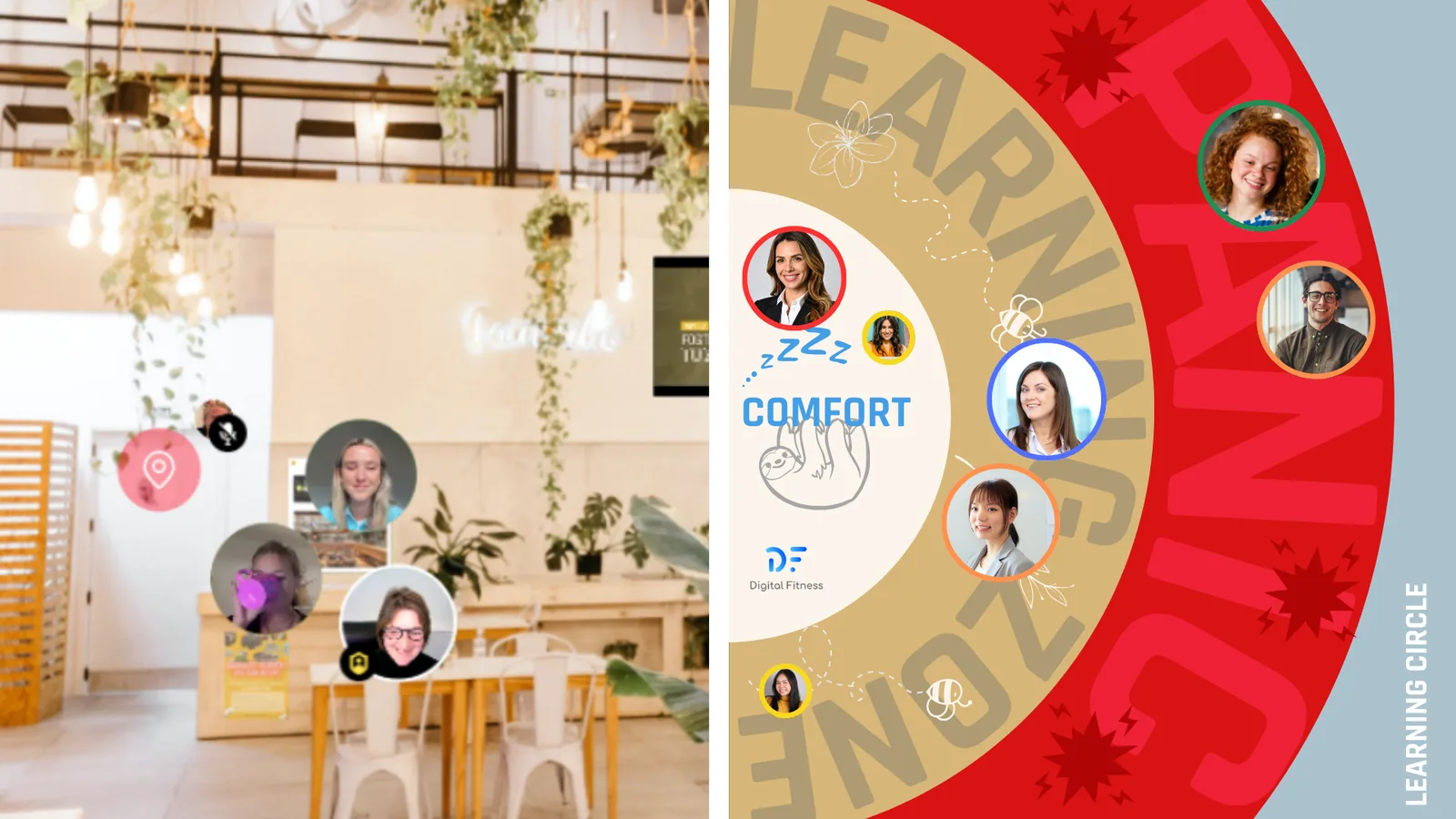
That principle works for organisations too. Not as a replacement for meetings, but alongside them. An environment you walk into without an invitation. Where you see who is around. Where you can join a conversation for a moment, or work quietly in a corner instead. A virtual office, not as a gadget, but as a place where people run into each other without having planned it.
The shift is subtle, but large. A meeting is something you attend. A place is somewhere you go. In a meeting the organiser decides when you're there and what you do. In a place you decide that yourself. That autonomy makes the difference. It's the difference between 'I have to be on that call at ten' and 'let me drop by and see who is around.'
In organisations that set up a virtual office, we see something change in how people deal with each other. Slowly the moments come back that you have missed since everyone started working from home. The chat in the corridor. The idea over coffee. The feeling of belonging somewhere, even on a day when you aren't physically in the office.
No place, no culture
Culture doesn't come from scheduled sessions. It comes mostly from the space in between. From the moments you're there without having to be. Gamers have known that for years. They don't need to arrange anything to be together. They just make sure there's a place.
You don't need to bring people together more often. You need to give them a place they go to themselves. No place, no culture. Only meetings.
Emilie van Rappard
Founder of MeetingMasters. Writes about meaningful gatherings at a distance — online events, virtual offices and human connection.