Blog
We have all got the hang of online by now.
A well-designed online session gets things done that would never work in a room. The grid of little square faces is only one way of meeting online, and the world beyond it's bigger than most people know.
A well-designed online session gets things done that would never work in a room. Two hundred people all making themselves heard within five minutes. An international group that speaks every month without a single plane ticket. An onboarding where new colleagues know on day one who to look for in which corner of the company.
That may sound ambitious if your idea of online is mainly a grid of little square faces with the occasional screen share. There's broadcasting there, but not much sharing, and the bigger, longer or more delicate the session, the more that hurts. Yet the grid is only one way of meeting online. There are others, and the world beyond it's bigger than most people know.
Online is less forgiving than live
Making purposeful contact online asks three things. A design that fits what you want to achieve. Formats that get everyone present actually taking part. And an environment that supports the kind of conversation you need.
Those three together separate a session where people afterwards say "I was there" from one where they say "that was worth my time". And a screen asks more of that design than a room does, not less. There's more distraction, looking away costs nobody anything, and someone who withdraws is less likely to be noticed. Which is exactly why the design matters more.
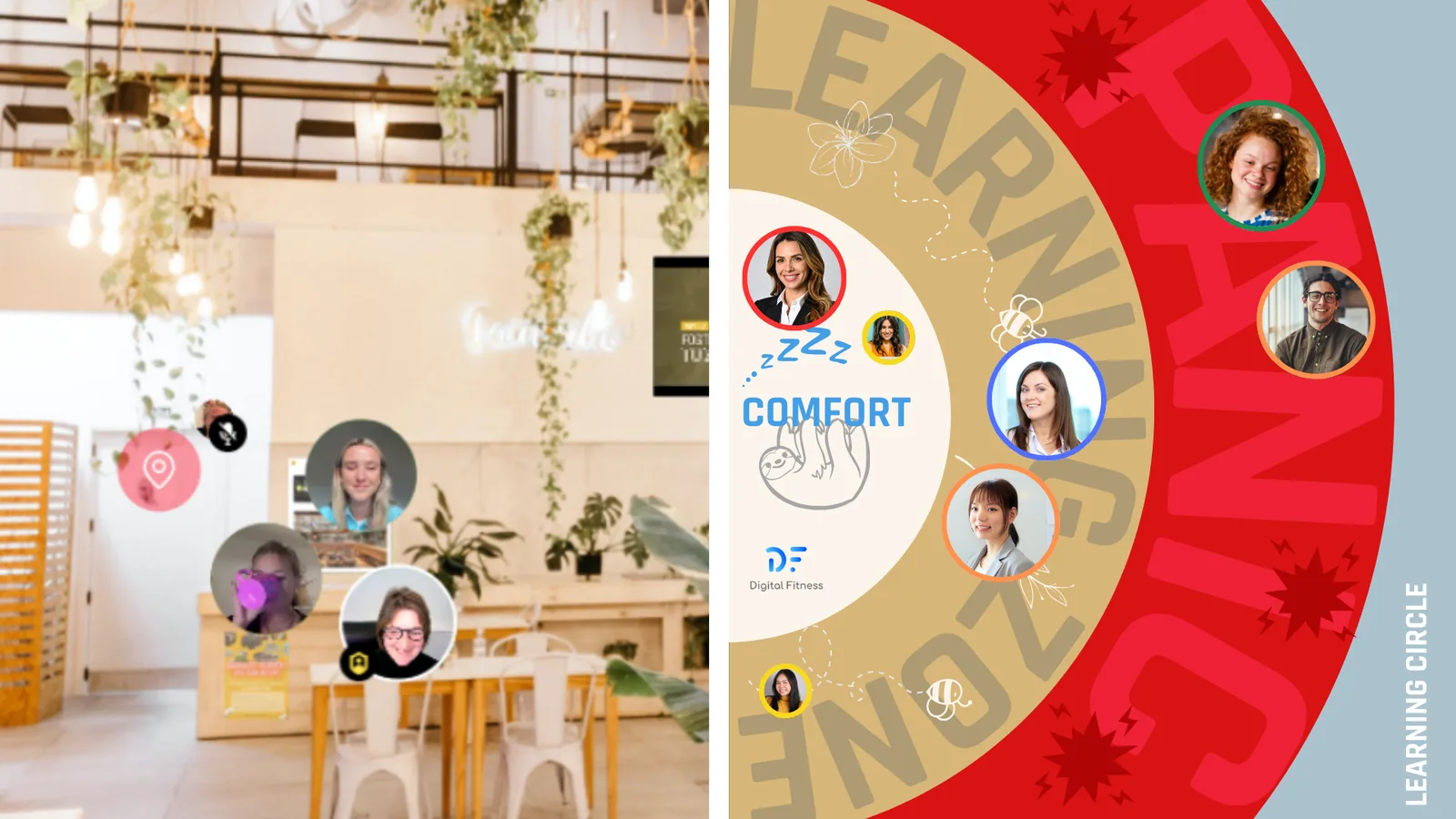
If you have people vote by walking to a green or a red area rather than clicking briefly, for instance, they stay far more alert. And if you leave room for small conversations spread around the space, you usually harvest more than you'd in a plenary round.
For the things that matter, the standard isn't enough
A community of five hundred people who normally only meet through a newsletter can genuinely network in a well-built online space. A strategy day with a hundred people can still have energy after lunch. A change programme can land with teams spread across three time zones.
Offline, for a session like that you'd book a venue, a chair, perhaps an events agency. Online, that same reflex ought to be standard, and increasingly it is. Not because you couldn't do it yourself, but because the session that matters deserves a different level of attention than the weekly catch-up.
People who feel seen stay involved. Decisions taken with real support hold. A team that genuinely knows each other online works more smoothly than a team that only meets at transaction level. An organisation that takes its gatherings seriously, online just as much as in person, builds culture instead of wearing it away.
Meeting online hasn't stood still since 2020
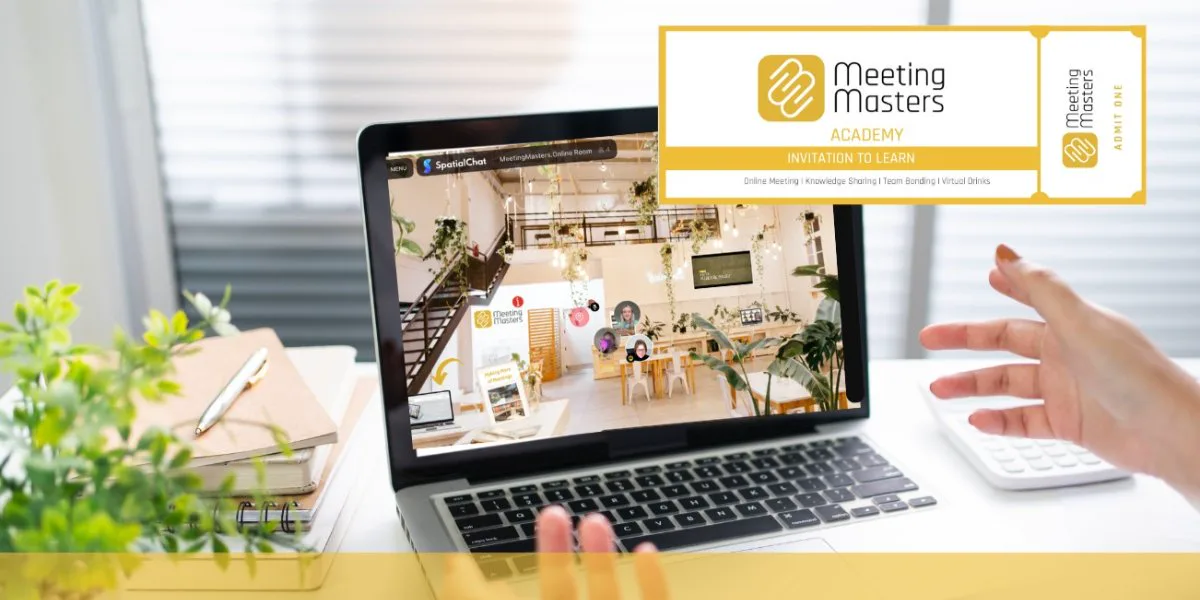
There are spatial platforms where participants move themselves around and talk based on who is near them. There are formats that wouldn't even be possible in a physical room. There are formats that make large groups feel small and personal.
Whoever has online down has mastered more than a tool. They have found a way to genuinely bring scattered people together. And for more and more organisations, that's exactly what they need.
PS. The examples above come from work in SpatialChat, a platform where participants move themselves through a space and talk based on proximity. Quite unlike Zoom, Teams or Google Meet. If anything, it's closest to how meeting in real life works. And that makes all the difference.
Emilie van Rappard
Founder of MeetingMasters. Writes about meaningful gatherings at a distance — online events, virtual offices and human connection.