Blog
Back to the office: the answer to the wrong question
At ABN AMRO there's a proposal to write office days into the collective labour agreement. Both sides want the same thing, and still the conversation is stuck. Because it's about the wrong subject.
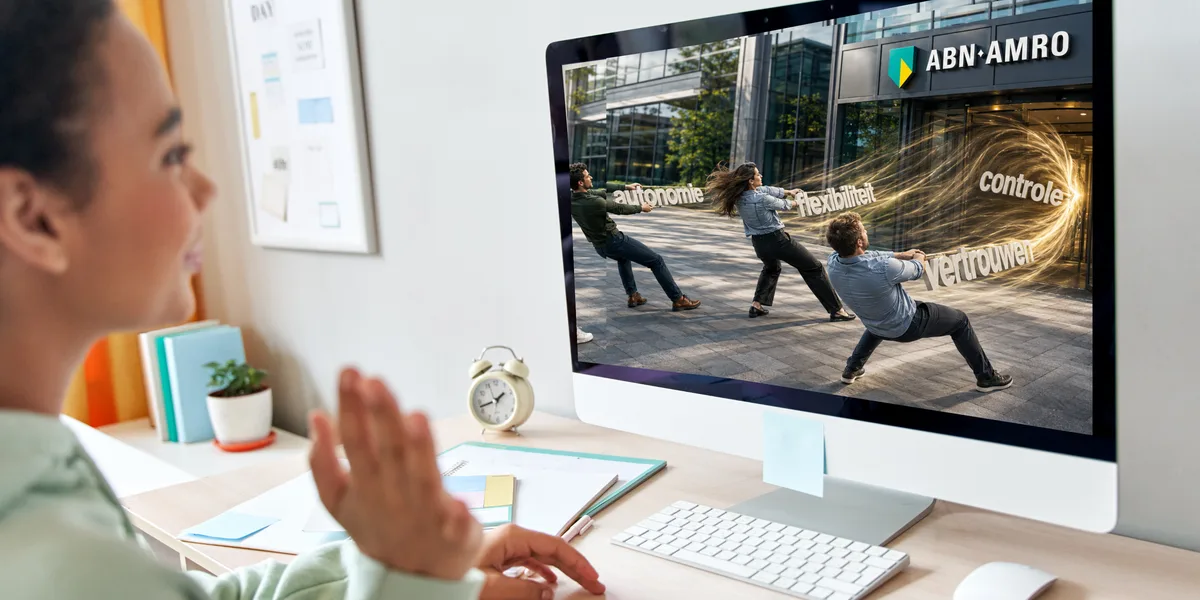
At ABN AMRO there's a proposal to write a minimum number of office days into the collective labour agreement. The negotiation is about where people work. But that isn't what the argument is really about. Nor is it about productivity, whatever is claimed. And only indirectly about creativity or the capacity to innovate. The underlying pain being described is the loss of cohesion now that not everyone sits in the same place. As long as that stays a side issue rather than the main subject, everyone will keep talking past each other.
More and more employers are fixing office days
The facts first. ABN AMRO wants the new agreement to require staff to spend at least half their working week in the office. The bank motivates this with better collaboration, more creativity and a clearer line between work and private life. Partly defensible. What stands out, though, is the route. Writing an obligation like that into a labour agreement is unusual, and it seems to close down the very thing it's after: more contact. The bank's current agreement leaves the choice to the conversation between employee and manager. What used to be a conversation now has to become an enforceable rule.
In that, ABN AMRO is ahead of a wider movement. Research by the Dutch employers' association AWVN shows that nearly eight in ten employers already set a minimum number of office days, usually two a week. And the pressure is rising. In KPMG's 2024 CEO Outlook, more than eight in ten executives expected staff to be back in the office full time within three years. A year earlier that was just over six in ten. What was an expectation then is on the negotiating table now.
Leadership has a point
Even though it's rarely named as such, the worry about the organisation being hollowed out is real. A long-running American study in Science shows that more than half of people working from home feel less connected to colleagues. Those living alone are the most vulnerable. Younger staff have nobody they can just put a quick question to. Onboarding stutters, knowledge travels more slowly, the sense of us wears thin. If you carry final responsibility for an organisation, you can't keep watching that happen.
Employees have a point too
Working from home delivers something nobody can dismiss. No two hours of travel for a one-hour meeting. Work that fits around school, caring for a parent or a hospital appointment. Room to concentrate. Fewer miles, lower costs. More than eight in ten employees now see working from home as an important condition of employment. People have built their lives around it, and rolling that back takes something away.
Strikingly, they share the diagnosis. Almost nobody denies that cohesion gets harder when everyone sits somewhere else. Or that something needs to be done about it.
And yet the argument hardens
How does a conversation get stuck when both sides want the same thing? Because it's about the wrong subject. Attendance is the only lever you can count, check and put in writing. So leadership reaches for it, and steers on office days while it means belonging. Employees hear no concern, only distrust, and start talking about their freedom. Unions negotiate over it, and the moment something is negotiable it becomes currency. Two days in exchange for something else.
At ABN AMRO you can already see it. The union De Unie calls the proposal an admission of weakness by management, and argues that it concerns only a small group who almost never come in. The positions are fixed before the conversation has started.
The means has become the end. The cohesion it all started with is no longer discussed by anyone.
The question isn't where, but how
Cohesion doesn't come from attendance itself. In the offices of the past it came from everything that happened around it: the question across the desk, the chat by the machine, going over a difficult conversation together afterwards.
Since 2020 a great deal has been settled about where people may work. About how they work together, almost nothing has been agreed. That just grew, at the pace Teams and Zoom were rolled out. Ever more tactical, ever more transactional. Agenda, tick it off, next. Organisations accepted a way of working whose rules they never wrote down. And now that it chafes structurally, they reach for the one thing that's on paper. The place.
Have the conversation
The questions you need to rebuild cohesion in 2026 come out of relationships that were neglected in a fast-changing time. They're about the basics of working together: about me versus us. About freedom and being reachable. About knowledge and communication.
- What do we hold each other to?
- How do we reach each other: call, message or email?
- When are you available, and when are you deliberately not?
- May those preferences differ per person, or does the same apply to everyone?
- What do we do together and what does each of us do alone?
- Which moments matter enough that we come together for them, online or in person?
A conversation like that produces insight, more understanding and a new direction: the starting point for a culture that shifts and connects. On top of that, it lets you make agreements that hold up far longer, so a sense of us isn't only discussed but actually sticks.
Give it a place: the third way between home and office
Culture takes shape when people behave in comparable ways day after day, and behaviour that builds a sense of us needs a place where it's visible. Whoever is in the office has that place two or three days a week. The rest of the week there's nothing.
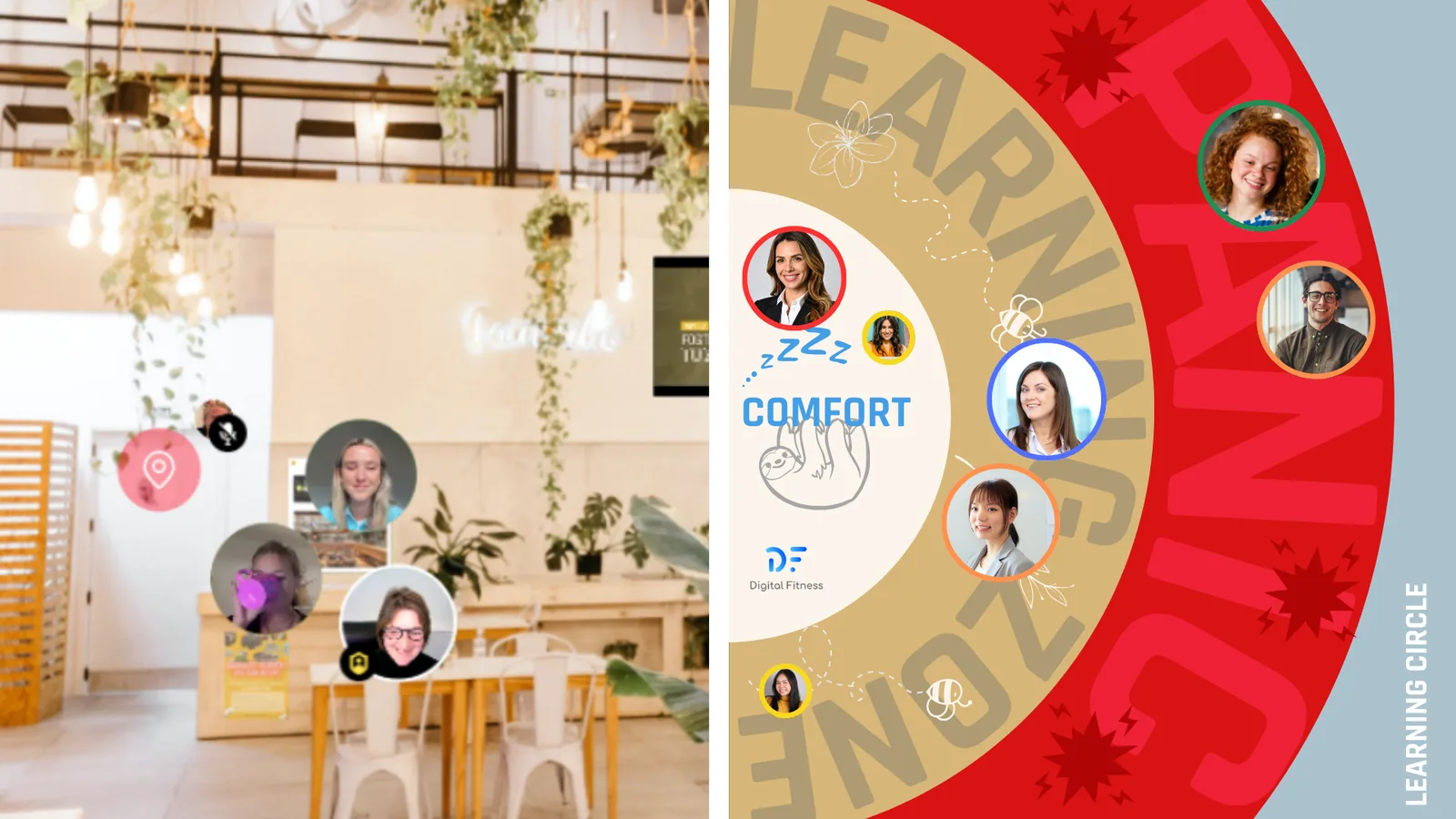
Real cohesion appears when there's a field of play where location doesn't matter. Where closeness can exist without being physical. Where connection can grow regardless of place or time zone. We argue for a third way: the virtual office. Not instead of working from home. Not instead of the office. In between. That virtual office is a permanent online environment where colleagues are present without needing an agenda item to be there. Where you sit and work alongside each other, just as in the real office. And where, online, the informal conversation happens in and between meetings, just as it does on a physical floor.
Move to a new place — and clear out the attic while you're at it
The good thing about moving to a virtual office is that the place and the conversation reinforce each other. Anyone setting up a new workplace has to answer the questions above. Where do you normally sit? When are you open to a chat and when are you not? Can the camera be off? Do you have to say something if you nip out for groceries? Much as you only clear the attic when you're moving house, so it goes with setting up your virtual office: it's the natural occasion for the conversation that should have happened long ago. And afterwards it turns around: the place keeps the agreements alive, because the behaviour is visible there every day. The office is the occasion, not the goal.
Emilie van Rappard
Founder of MeetingMasters. Writes about meaningful gatherings at a distance — online events, virtual offices and human connection.