Blog
The rule of eight: when a group stops running itself
Everyone knows the scene: a meeting with thirty people where three talk and the rest stay quiet. The problem isn't the people, but the mismatch between the goal, the group and the approach.

Everyone knows the scene. A meeting with thirty people where three talk and the rest stay quiet. Or an online strategy session with fifty participants where, after forty minutes, someone asks: "Any questions?" And nothing comes back.
The problem isn't the people. Nor the intention, which is genuine. The problem is the mismatch between what you want to achieve, who is in the room and how you go about it. In this piece we show where the line sits and what you can do about it.
Three, eight, and beyond
Put three people together with a question and they will work it out. Within ten minutes they have an answer. Or at least a direction.
Up to eight or even ten it still works, as long as the assignment is clear. Someone takes the floor, another responds, the rest join in. The group regulates itself.
Above that it tips. Two or three people talk. The rest listen. Or pretend to. One is checking email, another is mostly waiting for a graceful moment to break in and tell their own story.
Put more than fifteen people together and you have a presentation. Or chaos. One of the two. This isn't an opinion. This is group dynamics.
Why it goes wrong
The real problem isn't group size in itself. You can have a wonderful, involved gathering with three hundred people. The problem is that we don't think about the sum of three things: what do we want to achieve? Who is in the room? And what kind of engagement are we after? That's what you pick a format for.
The "I have a story, I have an audience, now I will tell it" approach works for a presentation. But the moment you want something from the group — engagement, input, a decision — that asks for something else.
What usually goes wrong
You put thirty people in a meeting room and expect a good conversation. You open a Zoom call with fifty participants and ask: "Any questions?" Afterwards you say: engagement was low. Or: online doesn't work for this sort of thing. But it wasn't the people. And it wasn't the medium. It was that the format didn't match what you were asking of the group.
What does work
The basic principle is simple. Large groups don't work as large groups. They work as collections of small groups, provided you organise that.
Up to eight people a clear assignment is enough. Not "discuss this topic", but "answer this question and write down three points." Structure supports the social dynamic that appears by itself in a small group.
Above that you need a facilitator. Someone who shares out the space, lets silences do their work and makes sure it isn't only the fast thinkers and loud talkers who get heard. And you work in subgroups. You split up, let small groups work and bring the results back together.
That sounds like something everyone already does, but it's skipped surprisingly often. Or it's done with break-out rooms where nobody knows what the point is.
What this looks like online
Online the line gets sharper still. In a video call with more than ten people you can no longer read faces. You miss the body language that in a room tells you who wants to respond, who is drifting off, who disagrees. You can't talk over each other. And you can switch your camera off and answer email. The group doesn't notice, or pretends not to. That makes formats online not optional but necessary.
And here it gets interesting. For simple assignments it's enough to put subgroups together and hand them a task. But for more complex questions, subjects you want to look at from several angles, you'd rather do it differently. Then you want participants to decide for themselves where their contribution fits best. Because the output gets better when people feel genuinely involved in what they're working on.
The design question
Every gathering with more than a handful of people is a design question. Not a logistical question. Not a technical question. A design question.
How many people are in the group? What do we want from them? Which format fits that? The answer is almost never: we put everybody together and then we talk about it.
It always starts with: how do we turn this large group into a collection of small groups that get to work? That's facilitation. Not a chair announcing the programme. Someone who creates the conditions in which a group can do what it came together for.
And that starts with three questions: how many people are at the table, what do we want from them, and how are we going to go about it?
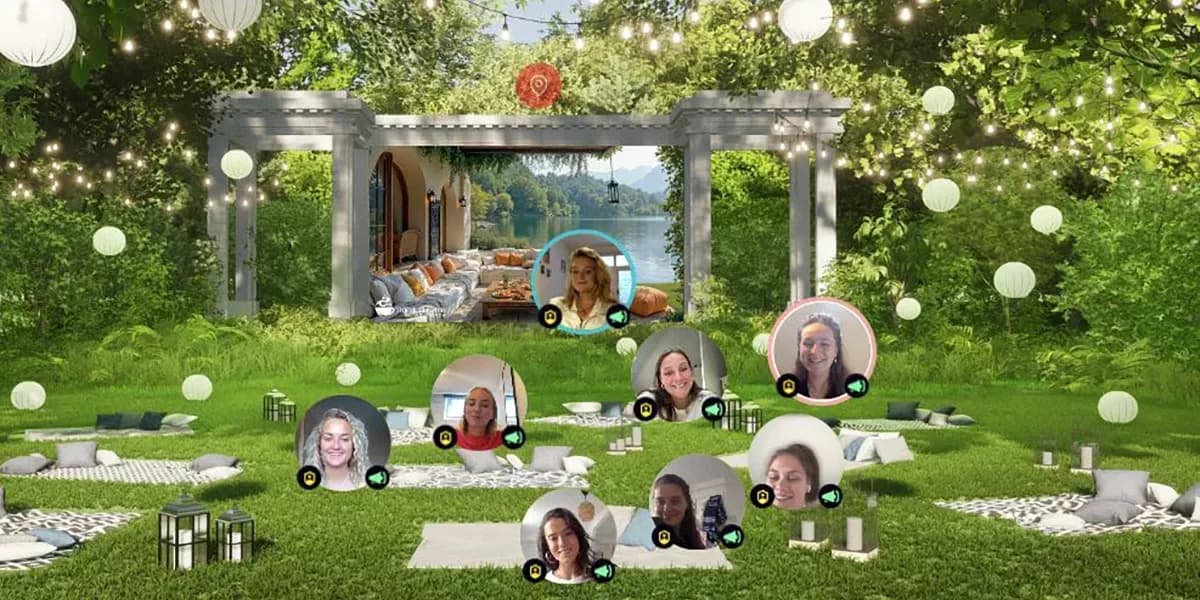
PS. Want to see what it looks like when participants choose for themselves where they go? In a SpatialChat environment people move through a space, see who is standing where and join the conversation that speaks to them most. That changes the dynamic. Curious? Get in touch for a demo.
Emilie van Rappard
Founder of MeetingMasters. Writes about meaningful gatherings at a distance — online events, virtual offices and human connection.